Intervention Design Process(IDP)
Behavior Design Process / Heuristics • 2019
Matt Wallaert
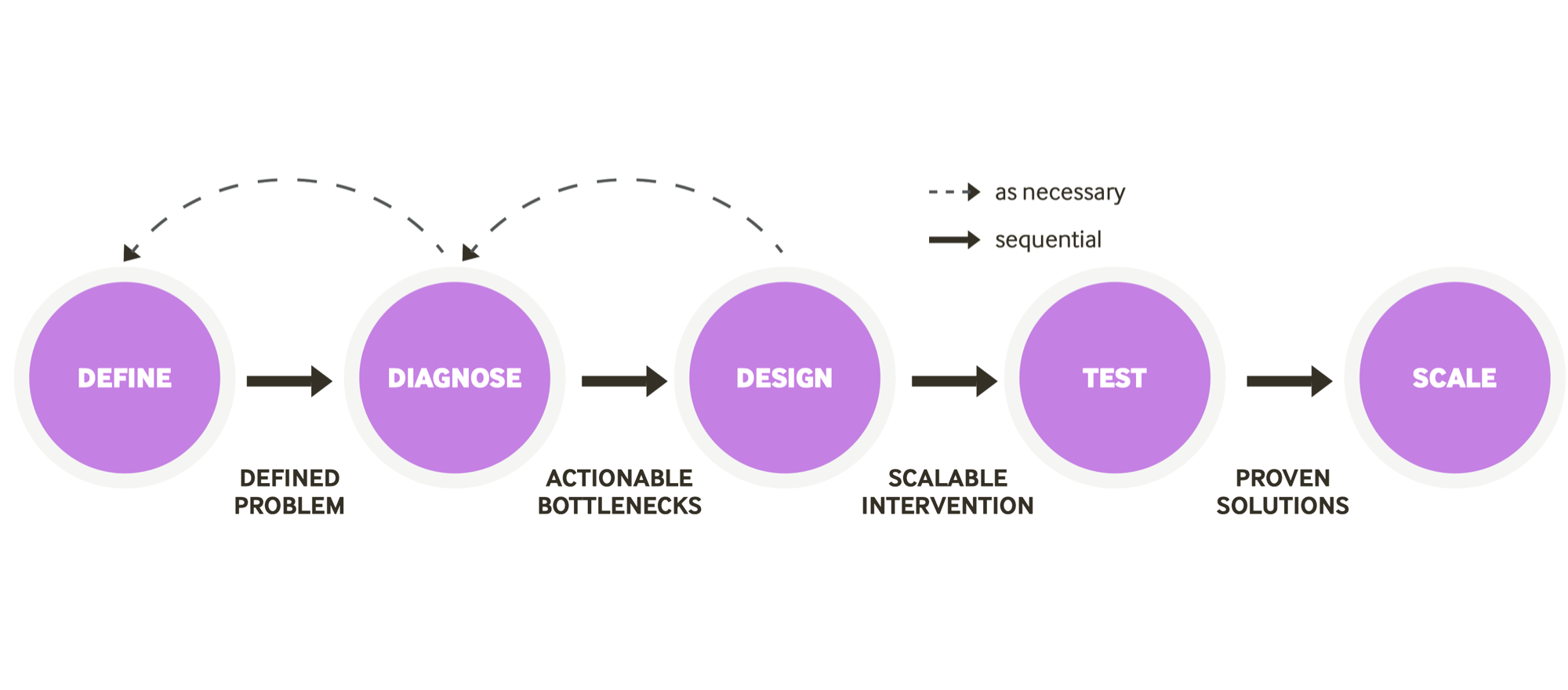
The Intervention Design Process is a 6-step process described by Matt Wallaert in his book, Start at the End. Intended as an applied behavioral science framework for use in a business setting, it draws from his experience at Thrive, Lending Tree, and Microsoft. It may be considered a behavioral equivalent or alternative to processes like the Stanford D School's Design Thinking Process or Ideas42’s Behavior Design Process.
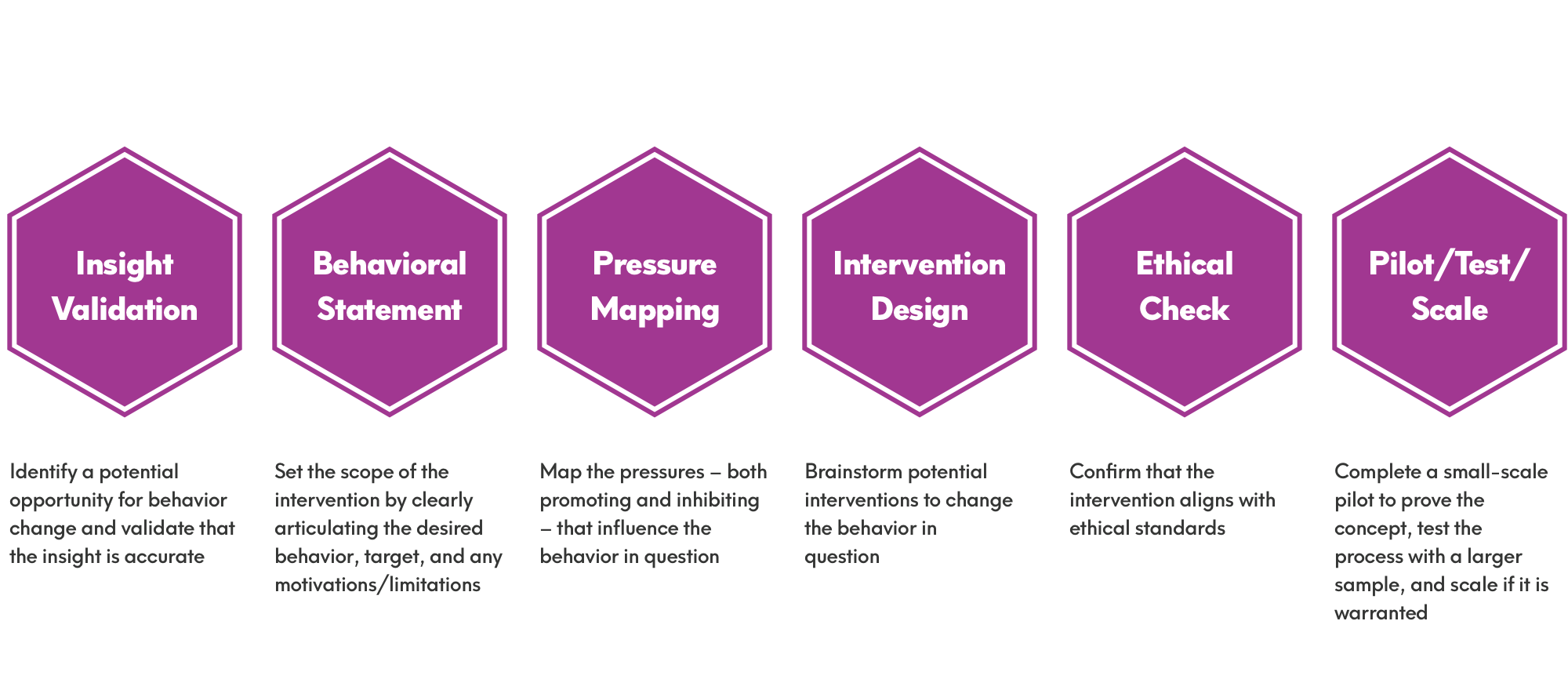
The 6 Steps of the IDP
- Insight Validation – identify a potential opportunity for behavior change and
validate that the insight is accurate
- Behavioral Statement – set the scope of your intervention by clearly articulating
the desired behavior, the target, and any motivations/limitations
- Pressure Mapping – map the pressures – both promoting and inhibiting – that
influence the behavior in question
- Intervention Design – brainstorm potential interventions to change the behavior in
question
- Ethical Check – confirm that the intervention aligns with ethical standards
- Pilot/Test/Scale – complete a small-scale pilot to prove the concept, test the
process with a larger sample, and scale if it is warranted